Specialist eye cancer care
Ocular Oncology
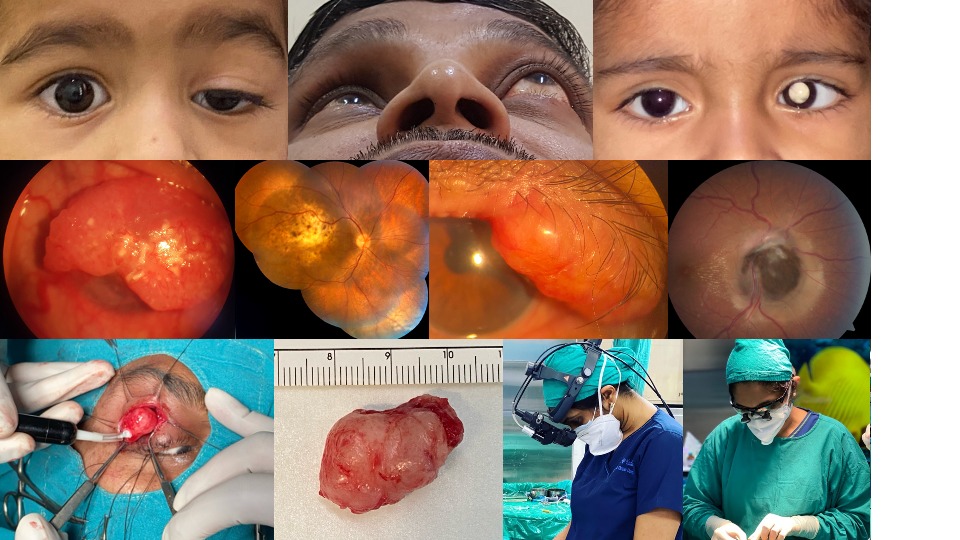
Specialist diagnosis and coordinated treatment for benign and malignant tumors inside the eye, on its surface, on the eyelids and within the orbit.

Director & Chief Surgeon · Ophthalmic Plastic Surgeon, Orbit Specialist & Ocular Oncologist
Cancers and other tumors can develop inside the eye, on the ocular surface, on the eyelids or within the tissues of the eye socket. Because these conditions are uncommon and can affect life, sight and appearance at the same time, they benefit from focused evaluation by an ocular oncologist.
Ocuprime Eye Institute brings ocular oncology, ophthalmic plastic surgery and reconstructive expertise together so that diagnosis, tumor control, visual function and rehabilitation can be considered as one coordinated treatment journey.
From Dr Sonal“My approach begins with an accurate diagnosis and a clear conversation. We then build a plan around the tumor, the eye and the needs of the person or family in front of us.”
What is ocular oncology?
Ocular oncology is the branch of ophthalmology focused on tumors affecting the eye and its surrounding structures. Lesions may be benign, premalignant or malignant, and each requires an assessment matched to its location and behavior.
Intraocular tumors
Tumors inside the eye include retinoblastoma in children, uveal melanoma in adults, metastatic tumors and a range of benign or inflammatory lesions that can resemble cancer.
Ocular-surface tumors
Growths may arise from the conjunctiva, cornea or limbus, including ocular surface squamous neoplasia, conjunctival melanoma and benign pigmented lesions.
Eyelid and adnexal tumors
Eyelid cancers require complete tumor control while maintaining eyelid closure, corneal protection and facial symmetry.
Orbital tumors
Tumors behind or around the eye can affect eye position, movement and the optic nerve, and may require imaging, biopsy and a customized surgical approach.
Why specialist evaluation matters
Precision diagnosis
Clinical examination is combined with ocular imaging, ultrasound, optical coherence tomography, photography, CT or MRI, and biopsy when tissue diagnosis is needed.
Treatment matched to the tumor
Depending on diagnosis and stage, care may involve observation, topical treatment, laser or cryotherapy, chemotherapy, radiotherapy, microsurgical excision or eye-removal surgery.
Function and reconstruction
When the eyelid, orbit or ocular surface is involved, reconstructive planning is integrated with tumor removal to protect comfort, function and appearance.
Multidisciplinary coordination
Care may involve pediatric or medical oncologists, radiation oncologists, pathologists, interventional specialists, radiologists and genetic counsellors.
Eye tumors in children and adults
Children
Retinoblastoma is the key malignant intraocular tumor of childhood. Other pediatric conditions include medulloepithelioma, orbital rhabdomyosarcoma and vascular lesions that can threaten vision through pressure or amblyopia.
Adults
Adult ocular oncology includes uveal melanoma, intraocular metastasis, lymphoma, ocular-surface tumors, eyelid cancers and primary or secondary orbital tumors.
A lesion is not always cancer
Benign nevi, cysts, vascular tumors, granulomas and inflammatory disease may mimic malignancy. Careful documentation and targeted testing help avoid both delayed treatment and unnecessary intervention.
Warning signs that deserve prompt assessment
In a child
A white pupil reflex, new squint, unexplained redness or swelling, or a change in visual behavior should be examined promptly.
On the eye or eyelid
A growing pigmented spot, fleshy surface lesion, non-healing eyelid sore or recurrent lesion diagnosed as a chalazion may require specialist assessment.
Vision or eye position
Unexplained one-sided vision change, flashes or floaters, double vision, a bulging eye or displacement of the eye can be associated with several conditions, including tumors.
Experience supporting the service
Sub-specialty training
Dr. Sonal Yadav completed focused training in ocular oncology and oculoplasty in Hyderabad, followed by ocular oncology, orbital disease and ophthalmic radiotherapy training at The New York Eye Cancer Center and observer training at MD Anderson Cancer Center.
Academic contribution
She is an editor and author of Surgical Ophthalmic Oncology: A Collaborative Open Access Reference and editor of Retinoblastoma: Diagnosis to Management, alongside peer-reviewed research and specialist teaching.
Patient-centred planning
Every recommendation is individualized according to diagnosis, tumor extent, systemic health, visual potential and the patient's or family's priorities.
Authoritative patient information
These external sources support the general medical information on this page. Individual treatment recommendations require a clinical examination and multidisciplinary review.
Speak with our team